The Journal · Style notes
Old Money Style: The Principles, Not the Costume
Old money style is built on fit, natural fibres, restraint, care and a wardrobe that improves with wear.
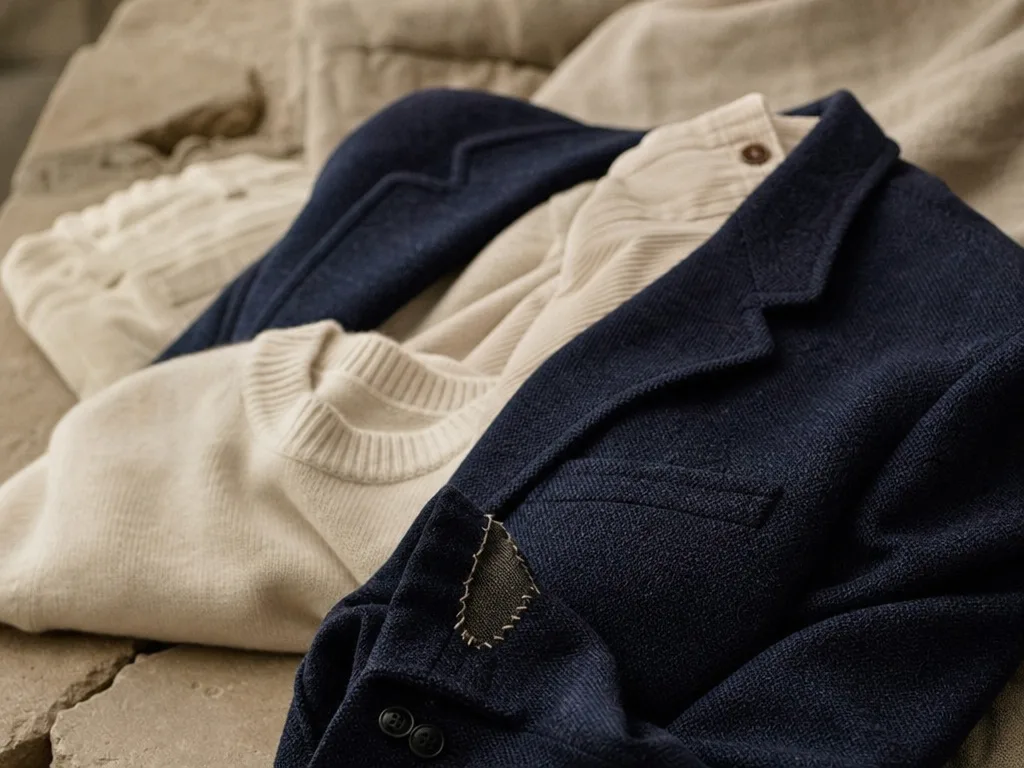
What does old money style actually rest on?
Old money style refers to a set of habits rather than a uniform. It is founded on six principles: fit, natural fabrics, a subdued colour palette, limited pieces, care, and a lack of logos. When one searches for old money outfits, the results often show pastel jumpers and deck shoes, which capture the surface of the style but miss the reasoning beneath it. The look itself cannot be found straight off the rack because each principle is a decision related to how a piece will age.
Fashion articles make the style seem like an itemised list of things to tick off. This makes a way of dressing seem like a look.
“fit and fabric carry the look, not the names”
Gudelevicius Fashion House
Together, these principles make up the house’s six defining elements:
- Fit: clothes cut to the body with care
- Natural fibres: wool, cashmere, linen and cotton
- Restrained palette: colours that combine without effort
- Few pieces: a wardrobe built on fewer, better garments
- Care: looking after clothes over time
- No logos: nothing on the outside to announce the wearer
Moving into a practical argument, fit, fabric and colour bring the look together.
How do fit, fabric and colour build the look?
Before anyone ever glances at the label inside a collar, the colour, fabrics and fit of an outfit determine how it looks. Clothes cut for a wearer are immediately apparent in the drape, length and shoulder line of an outfit for example. But a jacket is built to last with a hand canvas, fibres of natural fabrics change as they’re worn and a piece from a restrained palette will coordinate with many others. Label second. Cloth first.
The core fabrics are:
-
Wool - for coats and suits.
-
Cashmere - for knitwear.
-
Linen - for warm-weather jackets.
-
Cotton - for knits and shirting.
-
Leather - for bags, shoes and belts.
-
Fit and proportion are more important than the label. The shoulder seam should fall at the edge of the natural shoulder, not a few inches down the arm. Length should cover the seat of the pants. Who looks at the inside label when the fit is right?
-
Clothes should look cut for the wearer. This mean they should fall smoothly across the back and not pull at the buttons. A badge or a name can’t change a garment made for someone else.
-
Shape builds in from a hand canvas. Per Savile Row Bespoke Association, the jacket foreparts are fully hand canvassed. The structure of the canvas gives shape to the front, so the fabric when it settles around the body doesn’t just hang flat.
-
Cashmere is graded by fibre diameter. The ISO 5162 standard sorts pure virgin cashmere into types A to E by mean fibre diameter, with Type A at 14.9 microns or below. If you want to buy cashmere, it’s good to know what grade it is, as the label only rarely states the figure.
-
A restrained palette lets everything combine. Navy, cream, grey, camel, and olive can all sit really comfortably next to one another. A navy jacket looks good over grey trousers. Camel knitwear sits well over cream shirting. By choosing five colours all to sit with one another, you can turn a short rail into a wardrobe with many combinations.
Good cloth settles with wear. Wool, linen and leather each change with use, and that change is the point.
Once a cloth and cut are decided upon, the question becomes how many pieces a wardrobe needs, and how well they should be maintained.
Why do few pieces, care and no logos matter so much?
The old money style hinges on having a select few wardrobe staples, stitched to last and worn without branding. Each piece blends with the others in fabric, fit and colour for effortless week-long wear. Garments can be resoled and re-lined, but high-quality fabric and cut should speak for themselves without logos.
Why a small wardrobe works: each item complements the others. A jumper, trousers and coat that relate in shade can be worn together on any day without feeling like a uniform.
Buying fewer things of better make, having them fit, looking after them and repairing rather than replacing them allows clothes to look better with age.
It’s common to re-line coats, resole shoes and mend seams. These routine repairs enable garments to last for longer than one season.
Cashmere is a fine-knit fabric that requires a bit of special care. Laundryheap recommends hand washing it in cold water at or below 30°C using a gentle wool or cashmere detergent. Tumble drying and wringing can lead to shrinkage and felting. Instead, it’s a short routine:
- Water that is cool and comes in at 30°C or less.
- Mild detergent for cashmere or wool.
- No tumble drying or wringing.
The quality of cut and cloth should be clear. The soft hand, clean shoulder and tight weave tell you more than any monogram.
A considered wardrobe shows time: a coat that has been resoled or re-lined, a well-worn knit, and pieces from different years that work together because they share good fabric, quiet colour and a fit that suits the wearer.
The ideal model is a managed house rather than a display one.
A lived-in house is a well-kept one. Its furniture is chosen for use, mended when worn and rearranged as the years pass.
Quiet luxury is a label in its own right, but shares some of this restraint.
How is old money style different from quiet luxury?
Quiet luxury emerged as a label but has gone mainstream on social media and TV, where it has come to mean signalling wealth by not shouting. Old money style has been around longer and moves at a slower pace. It’s an inherited dress code defined through use. Both embrace muted colour and natural fibres and abstain from branding, putting them in the realm of restraint. But they part on time: old money is worn in and accumulated while quiet luxury can be purchased as a look.
The look can be traced back to the rise of the capitalist class in Europe and America during the late 18th and early 19th centuries, according to Wikipedia. It took off in the 2020s when television and social media helped to popularise the term.
| Quiet luxury | Old money style | |
|---|---|---|
| Origin | A label that went mainstream online and on screen | A way of dressing with roots in established wealth |
| Time | Bought as a finished look | Accumulated and worn in over years |
| Logos | Can still work as a status purchase | Rests on use, not on display |
| Driver | Trend cycle and social media | Repetition, care and repair |
The intersection between the two is restraint. Both tend to stay away from branding and favour natural fibres and understated colour. However, the difference is all in purpose. Quiet luxury intends to be noticed, typically by mindful peers. Old money is not a trend. It is a habit, seen only after years of wear.
The ease people admire comes from clothes that are well chosen and well worn in, never from looking new or expensive.
The menswear approach starts in the gap of time, which guides how tailoring is built.
What does old money menswear look like?
Menswear steeped in the old money ethos highlights five hallmarks: a precise fit across the chest and shoulders; structured jackets that reflect their quality with every touch; quiet knitwear and oxford shirts worn with odd trousers; welted shoes that you can resole; and interchangeable parts.
Fit is priority number one. Since a jacket’s shoulders are the most difficult part to alter, they need to be right off the rack. The seam at the shoulders should be where the shoulder ends, and the chest should be flat.
Here’s what you’ll need:
- A structured-shouldered jacket in navy or grey
- Oxford cloth shirts
- Fine-gauge knitwear in natural fibres
- Odd trousers in a tone that differs from the jacket
- A plain overcoat in charcoal, navy or camel
- Welted leather shoes and a simple leather belt
Well, apart from the canvas and chest (most of which are hand-stitched), the other test of a jacket’s quality is its structure. As per the Savile Row Bespoke Association, their cutting rooms and workshops take more than 50 hours to make an average suit.
Handwork is where a jacket’s shape is set, and no pattern can fully replace it.
As the sole of a welted shoe wears down, it can be resoled and a matching leather belt finishes the outfit. Consistency and interchangeability can keep the look working. For example, a navy jacket might be worn with grey trousers one week, and cream the next. The same approach applies to womenswear.
And how does it translate to womenswear?
The concept of old money dressing for women has similar traits to that of menswear – restraint, cloth and cut. A tailored jacket, trousers with a clean line and a roomy coat carry the silhouette. Knitwear and shirting in natural fibres do the rest, and pilling is a fair test of quality. Finish with pieces collected over the years, and quiet accessories.
A change in silhouette is only skin deep. Underneath it all, the thinking remains the same. A single-breasted coat through the body reads as deliberate, while clean trousers with a straight line and a clean break at the shoe do more than print.
Consider natural fibres like wool, cashmere, cotton and silk for both knitwear and shirting. Pilling is the small balls of fibre that appear on the surface of a knit. It reveals how well the yarn was spun. A good fine gauge jumper looks after its face as you wear it again and again.
Smart womenswear essentials:
- Wool single-breasted coat with ample room in the shoulder
- Straight cotton twill or wool trousers
- Plain weave tailored jacket
Understated accessories:
- Leather bag without noticeable logos or branding
- Pearl or plain gold
- A silk scarf in a muted color scheme
An accumulation of pieces bought over the years looks like a naturally built wardrobe rather than a matched set. For example, a jacket from years back, worn well with trousers from this season.
It’s the fabric and shape that make the cut; the label on the rail isn’t what should.
The typical mistakes start with buying the props all at once.
What should you avoid when dressing old money?
Old money style turns into costume when everything is brand new, matched or imitative, when a bought set is treated like a collection of props, or when logos substitute for cloth. Clothes should age naturally, pieces should be added one at a time, and cloth should be judged first.
The props are often copied: cable knits, loafers and a blazer with gold buttons, all bought new at once and worn together like a uniform. If a piece only works as part of a look, or its appeal depends on a logo or a trend, it is costume.
Good design is more than following a copycat look. Pieces should work on their own merit.
The giveaway of a costume is that everything is new, matched and on-theme.
A wardrobe that can be deconstructed and reconstructed is not a costume.
“If it fits, is well made in a good natural fabric and works across your week, it belongs.”
Gudelevicius Fashion House
Which checks decide whether a piece belongs?
An article belongs when it fits the shoulder, is spun from natural fibre, pairs with what one owns, can be repaired and looks good without its label.
What we look for
- Fit: the shoulder seam sits on the bone and the sleeve moves freely.
- Fabric: natural fibre with a dense, even hand.
- Versatility: three outfits from what one already owns.
- Longevity: a worn elbow is a repair, not a reason to discard.
- Logo test: with labels removed, cut and cloth still hold attention.
The practical test is simple: ask whether three ways to wear the piece can be named with what is already owned, and whether it would still be wanted, mended, in ten years.