The Journal · Fabric
Types of Wool: A Field Guide From Lambswool to Vicuña
A practical guide to lambswool, merino, Shetland, cashmere, camel hair, mohair, alpaca and vicuña, with notes on feel, warmth and care.
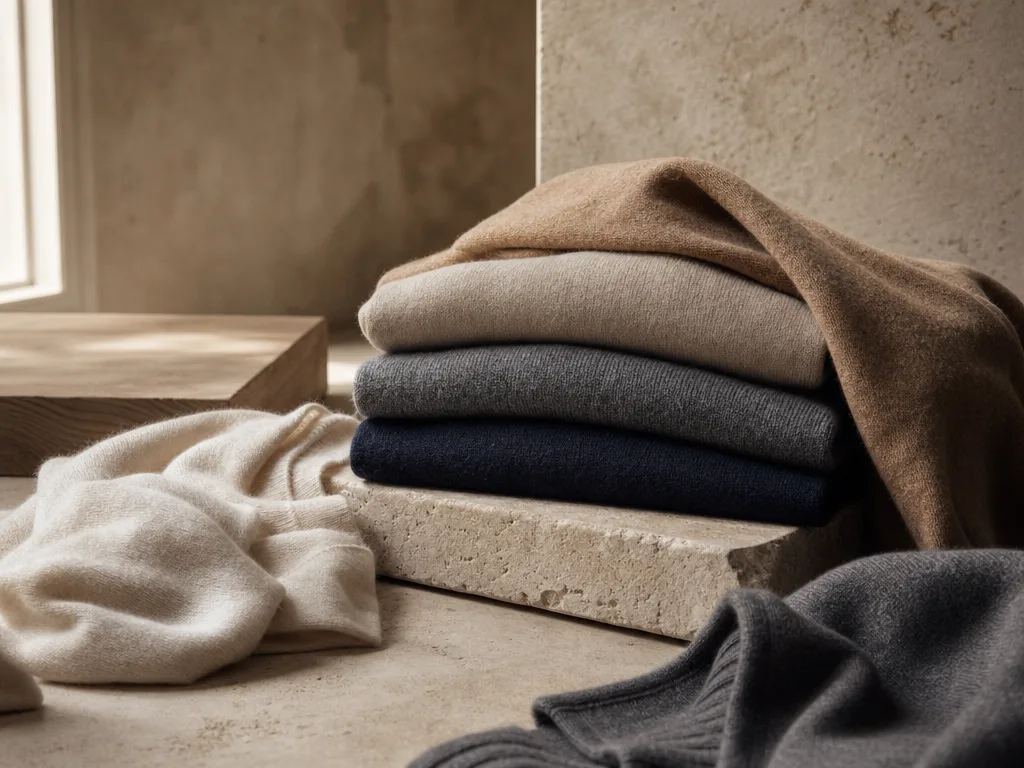
What are the types of wool, and which one suits you?
Wool varies by fineness, animal and handle. Wool types from sheep’s (such as merino) make up one large family of wools, while specialty fibres like camel hair, mohair and cashmere are from other animals like camelids and goats. The handle can make a fibre better for certain garments (like a coat, jumper or scarf), while the fineness can make the feel sit softer next to the skin.
Wool matters to us because no other family of fibres covers so much: from a rugged Shetland jumper to a featherweight cashmere scarf, each fibre has its own character, and each suits a different garment.
Gudelevicius Fashion House
The label does not tell the full story. Fineness comes first, then the handle. A field guide that identifies each fibre, where it comes from and what it does best helps match the material to the garment rather than relying on the most familiar name.
Fineness is a key focus of this guide. This is measured in microns and dictates how close a fibre hugs the skin. Handle is the feel and drape that follow.
Since knitting usually means a sheep’s wool, the guide reviews several sheep fibres first.
What is lambswool?
Lambswool comes from the first clip of a young sheep and is springy-soft, with a loft that traps warm air. It isn’t itchy as scratchiness stems from coarse fibers. It wears well and it used in sturdy jumpers and everyday knitwear.
Which animal does it come from?
Lambswool is the fibres from the very first cut of wool off a young sheep. It is the softest wool fibres a flock will create.
How does it feel?
While soft, lambswool is springy. It also has loft which helps it hold warm air close to a body without adding bulk.
Does it itch?
When it comes to itchiness, lambswool, on its own, does not itch. Lambswool isn’t coarse; scratchiness comes from coarse fibres. Fine merino or lambswool can be gentle on the skin.
How does it wear?
It is resilient, lightly pills, and recovers its shape after regular wear.
What suits it?
- Sturdy jumpers
- Everyday knitwear that needs real warmth
How should it be cared for?
- Cool wash
- Wool-safe detergent
- Dry flat, away from heat
Merino takes the same layering role with a finer thread, and it comes next.
What is merino wool?
Merino sheep produce a dense, finely crimped fleece, whose fibres make it suited for next-to-skin knitwear, base layers or layers worn underneath tailoring. Compared to lambswool, merino is smoother, finer and less bouncy and lofty. The crimp also traps air, so a knit made of merino stays warm but isn’t heavy, and holds its shape even after regular wear. Care can require careful handling: drying flat, washing with cool water and a chance to rest between wears.
Diameter is essentially the thing that decides where a fibre really belongs. Woolmark generally puts fibres below 19.5 microns in the base layers and fine knitwear category. And those at the finer end of the range are the fibres Woolmark places in base layers and fine knitwear.
The wool also differentiates itself in appearance as lambswool is slightly lofty and springs back after being compressed, while Merino wool lays smoother and more even.
- When knit is crimped, the fibres contain air, making the knit warm but lightweight.
- Its fibres maintain their shape yet stay in shape even with consistent wear.
Care requires restraint. The fibres benefit the most from a cool wash, a flat drying spot, and adequate resting time between wears.
What is Shetland wool?
Shetland wool is from small, hardy sheep that have been bred to survive in northern climates. It has a slightly rugged, springy but fine fibre that comes in natural colours ranging from black to different shades of white. Its slightly springy fibres trap warm air and make it light yet warm. Because it is naturally resilient, it’s great for outdoor layers, heritage jumpers, and tweed-style knits. It can felt easily so needs to be hand-washed in cool water and laid flat to dry.
Although it’s tough, it isn’t harsh. The fibre keeps good crimp and elasticity, which gives the cloth its bounce.
- Warmth: The springy structure traps air within the knit, so the cloth feels light yet insulates well.
- Wear: It keeps its texture. Meanwhile, the fibres keep their shape and texture with careful washing.
- Suits: Heritage jumpers, tweed knits and outdoor layering.
If cared for properly, this robust fibre is relatively low maintenance:
- Hand wash with a specialty wool detergent in cool water
- Never wring
- Dry flat and away from heat.
Its ruggedness sets it apart from finer fibres. Cashmere, by contrast, comes from a very different animal.
What is cashmere made of?
Cashmere comes from the soft undercoat of the cashmere goat, collected by combing or shearing the animal’s body. It features fibres that are finer than that of most merino. This fineness enables the fibre to be soft to the touch, while also a strong insulator for its weight. Like many fibres, it pills initially and then breaks in with wear. It is great for layering, scarves, and knits that rest directly on the skin. It benefits from gentle care.
Cashmere goats produce this undercoat beneath a coarser layer of hair. According to Textile School, cashmere is a little finer than Merino fiber at 13 to 19 microns, compared with 15 to 27 microns.
Fineness drives both the hand and the warmth. A thin fibre makes a light, silky fabric.
The fabric feels soft and dense against the skin. Given its weight, cashmere insulates very well so it’s best worn close to the body and not as a heavier outer layer.
- How it wears: initial pilling that tends to settle throughout regular wear.
- Suits: pieces worn close to the skin, like cashmere scarves and layers beneath your coat.
To get the most out of your cashmere, treat it with care:
- Hand wash it with cool water.
- Avoid wringing it.
- Lay it flat to dry.
Camel hair takes a different route to warmth.
What is camel hair?
Camel hair refers to the soft undercoat of the camel. It is typically separated from the coarser guard hair and maintains a natural tan colour. Because of its hollow centre when spun, it traps air and makes cloth light and warm. Due to how delicate the fibre is, mills making coats typically combine the fibre with wool or use dehaired down. Its soft drape makes it particularly suited for tailoring and structured coats.
A hollow core is why camel can be warm without weight.
High-friction areas like elbows and cuffs can cause pure camel pills. Treat it like a delicate fibre and adopt these three habits:
- Opt for a gentle wash or cleaning that’s professional
- Hang it using a broad wooden hanger to support the shoulders
- Air it and be sure to fully dry between wears
What is mohair?
Mohair, the fibre from the Angora goat, has a sheen and loft that cashmere does not. Its finest grade, superfine kid, has a fibre diameter around 23 microns. It is strong but sheds early, which makes it best for open knits, textured jumpers and structured tailoring. It should be handled with care.
Etymology aside, mohair is a type of goat fibre that feels markedly different from cashmere, which is soft and dense, while mohair may have a halo and sheen. Mohair brings sheen and loft; Shetland brings rugged texture and warmth; camel hair suits coats; cashmere suits close-to-skin knits.
A Mohair South Africa market report records 23-micron kid mohair, placing it within the finest end of the fibre’s range. Finer fibres typically feel softer to the skin.
- Strong and resilient, although it may shed a halo of fibres early on.
- Best suited to structured tailoring, textured jumpers and open knits.
Caring for it is relatively straightforward.
- Gently brush the garment.
- Avoid heat.
- Dry flat away from direct heat.
In terms of its sheen, compare mohair with alpaca (from South American camelids).
What is alpaca?
Alpaca is the fleece of a South American camelid commonly - but not exclusively - the Huacaya breed. It’s soft, silky, fine and has good staple length. It’s warm for its weight and comparable to many of the finer wools. Alpaca has some fluidity to its drape, knits may lose shape or bag over time, and it is well-suited for softly tailored layers, relaxed knits and scarves. Alpaca should be reshaped when wet, dried flat and washed in cool water for maximum longevity.
- Warmth: Alpaca feels as warm as many fine wool. Its weight feels a bit lighter—so a lighter knit can often perform the work of a heavier knit.
- Wear: Alpaca softly drapes, but knits can bag or stretched out over time. Alpaca is more about softness than structure.
- Suitability: Especially good for scarves, softly tailored layers, relaxed knits and knits that fall well (rather than fit well).
Caring for it is easy:
- Wash on a cool cycle.
- Lay it flat, away from heat, to dry.
- Reshape while wet.
What is vicuña?
Vicuña, a wild Andean camelid, is alive when sheared for one of the softest animal hairs around. It is a scarce supply due to protected rules for trade. It feels light, warm and delicate, perfect for ultra-soft coats and scarves. It also requires specialist cleaning.
How fine is it?
Wikipedia states that vicuña runs from 11-13.5 microns on average.
Why is it so rare?
Most populations of vicuña fall under CITES Appendix II, which means they are only allowed to trade fibre resulting from live shearing.
The rarest fibres such as vicuña are remarkable, but the right choice is the fibre that fits the garment and how it will be worn.
Gudelevicius Fashion House
How does it wear?
Warm, silky and light. Delicate and prone to abrasion and friction.
What suits it?
- Fine coats and scarves where softness gently touches the skin
How should it be cared for?
- Cleaned by specialists
- Avoid frequent washing
- Dried flat
Few fibres sit so close to the limits of wear.
How do the fibres compare at a glance?
There are several animal fibers, each with its own suitability for different types of garments and need for warmth, care and hand feel. While some, like lambswool, are durable and great for every day use, others, like vicuña, are more delicate and better for occasional wear.
| Candidate | Animal | Hand | Warmth | Good for | Care |
|---|---|---|---|---|---|
| Lambswool | Sheep | Soft, springy | Moderate | Everyday knitwear | Gentle wash, dry flat |
| Merino | Merino sheep | Fine, smooth | Warm for its weight | Base layers, fine knits | Gentle wash, dry flat |
| Shetland | Shetland sheep | Crisp, slightly springy | Hardy | Sturdy knits, outdoor layers | Hand wash, dry flat |
| Cashmere | Cashmere goat | Silky, light | Very warm for its weight | Fine knits, scarves | Hand wash or specialist clean |
| Camel hair | Camel | Soft, lofty | High | Coats, wraps | Specialist clean |
| Mohair | Angora goat | Lustrous, airy | Warm, light | Textured knits, evening wraps | Specialist clean, dry flat |
| Alpaca | Alpaca | Soft, smooth | Warm | Knits, scarves | Gentle wash, dry flat |
| Vicuña | Wild Andean camelid | Weightless, silky | Intensely warm | Scarves, fine coats | Specialist clean, dry flat |
| Hardness for the daily jumper. Softness for the fine scarf. |
The garment comes first, and the fibre follows from how it will be worn.
What should a shopper look for in a natural knit?
You can tell how well a natural knit is made by checking out five things: the finishing, the recovery, the care label, the density and the fibre percentage.
-
Percent of fibre. While the leading fibre on the label is important, it doesn’t reveal the full fabric mix, and the proportions set warmth and weight. Check the percentage of each fibre in a blend, not only the first name on the label.
-
Density. Fabrics with a tighter weave are more resistant to penetrating light, providing structure and substantiality. Looser fabrics look more flowy on the hanger but tend to wear out faster. Hold the knit or weave up to the light to assess its density.
-
Recovery: When lightly pulled, a well spun fabric immediately bounces back to its original shape. This point is most clear for merino and lambswool. Check how the fabric recovers when gently stretched.
-
Finishing. Cuffs maintain their ribbing, seams rest flat, and hems hang equally. Inspect the finishing at seams, cuffs and hems.
-
Care label. Natural fibres generally call for flat drying with gentle washing. If there’s a high heat demand on a cashmere or wool item, that’s a red flag. Read the care label, since genuine natural fibres usually ask for gentle washing and flat drying.
This guide was written by DGUDELEVICIUS. See How we choose to learn about this approach.